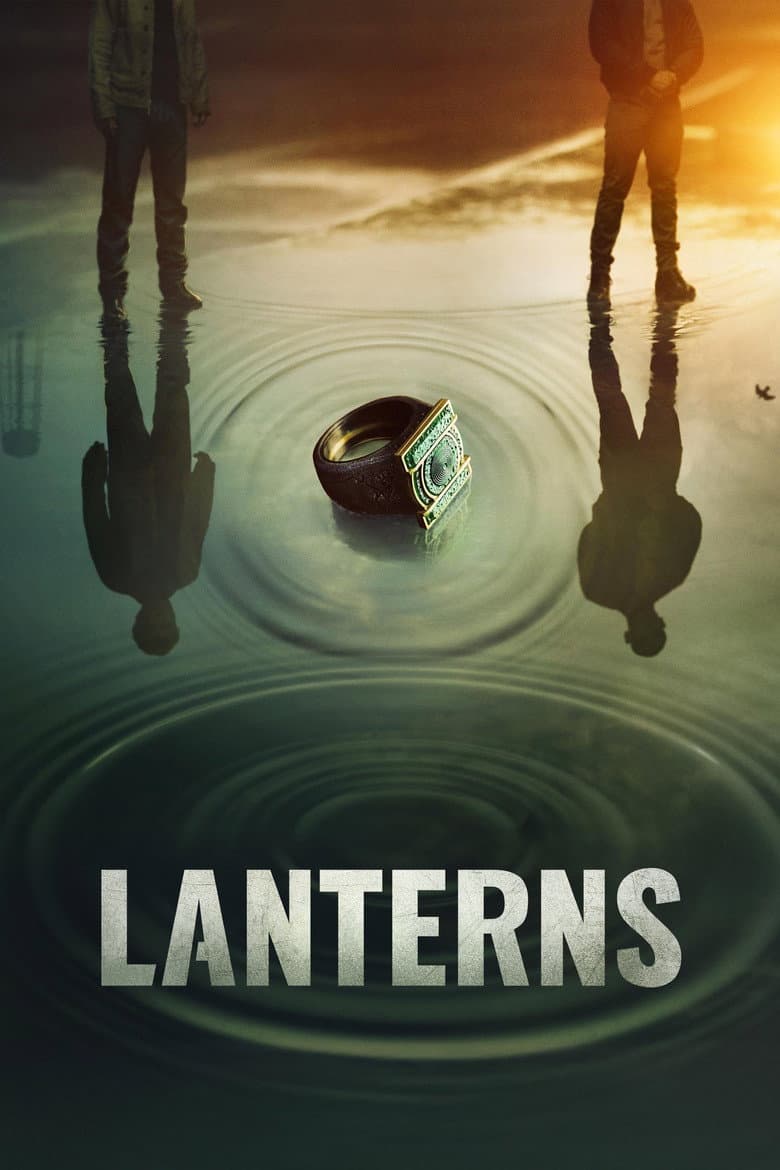
Image via TMDB The season one finale of HBO’s Lanterns has landed, and it delivers a gut-punch that recontextualizes the entire mystery: Sheriff Kerry Kane (Kelly Macdonald) is...
Image via TMDB
📺 Trailer: Lanterns | Official Trailer | HBO Max · HBO Max on YouTube
The season one finale of HBO’s Lanterns has landed, and it delivers a gut-punch that recontextualizes the entire mystery: Sheriff Kerry Kane (Kelly Macdonald) is the one who killed Hal Jordan (Kyle Chandler). This revelation, buried in the emotional wreckage of the series’ conclusion, shifts the show from a standard superhero procedural into a deeply personal tragedy about the lengths a mother will go to protect her child’s secret. It is a bold, controversial, and arguably the most human decision the writers could have made, stripping away the cosmic spectacle to leave us with a very grounded, very painful truth about love, fear, and the burden of secrets.
For those joining us after the dust has settled on Rushville, the stakes here are not about saving the universe from an alien invasion. They are about saving a family.
The finale, titled “Dirt and Stars,” resolves the central question that has haunted viewers since the pilot: Who pulled the trigger on Hal Jordan, and why? The answer is not Sinestro, not the Guardians, and not some rogue Manhunter.
It is the woman who waited for Hal at the prison gate with a six-pack of Schlitz and a heart full of hope.
It is a twist that relies on the show’s earlier establishment of Manhunter biology, a detail that, while present in the lore, feels like a curveball to many viewers who were expecting a more traditional villainous antagonist.
But as the show’s creators have pointed out, this was never a show about spectacle; it was a show about the people in the room.
A Grounded Finale in a Genre Built on Spectacle
One of the most refreshing aspects of Lanterns is its refusal to follow the standard superhero playbook. In a genre that often defaults to CGI-heavy slugfests and sky-beam invasions, the creative team behind Lanterns made a deliberate choice to keep the finale emotionally grounded. Showrunner Chris Mundy made it clear during the press conference that there was never a version of the finale that was more action-oriented. "If we landed it emotionally with [Hal and John], we would’ve done our job," Mundy stated. "Action for action’s sake would’ve been distraction and incident instead of emotion." This philosophy is evident in the structure of the series, where co-creator Damon Lindelof notes that the "Battle of Rushville" in episode five served as the series’ version of the obligatory third-act action set piece. By front-loading the physical conflict, the final three episodes were free to focus on the aftermath, the investigation, and the emotional coda.
Co-creator Tom King, who pitched the series as an earthy, True Detective-like spin on Green Lantern lore, emphasized that avoiding clichés was a sticking point from day one. "They make it boring and give you that superhero exhaustion we’ve seen a thousand think pieces about," King said. "So it’s not what you expect, and that’s entirely what this show has been." This commitment to character over spectacle is what makes the finale’s twist land with such force. There is no otherworldly threat forcing the characters’ hands; there is only the weight of human choices. The finale begins with an addendum to the events of episode five, where Sheriff Kerry Kane arrives at Rushville’s demolished motel to find a defeated Hal Jordan lying in the rubble. He has already accepted that he will be sent to prison for reckless endangerment, allowing the Guardians of the Universe to carry out their long-standing plan to permanently replace him as Earth’s Green Lantern. But this is not the end of Hal’s story; it is merely the beginning of a new chapter, one that is far more intimate and devastating than any cosmic battle could be.
The Manhunter Mystery and the "Nurture vs. Nature" Debate
The core of the finale’s mystery revolves around the nature of Manhunters. From the beginning of the series, we were told that Manhunters are a rogue race of ruthless beings created by the Guardians, whose programming always leads them to destroy anyone in their path.
We saw this with Zoe (Poorna Jagannathan), who, despite having real ties to the community of Rushville, was fine with seeing the place destroyed after Hal and John realized she was a Manhunter in disguise. "She's programmed a certain way," Jagannathan told TVLine.
"And, as the series made clear, that programming was stronger than Zoe's love for her family or her connection to the town." This established a clear rule: Manhunters are dangerous, and their nature is immutable. Or so we thought.
The finale tosses this reasoning aside when it is revealed that Noah Macon (Shea Pritchard), Kerry’s son, is also a Manhunter. This revelation is a massive shift in the show’s ethical landscape.
It forces the audience to grapple with the "nurture can overcome nature" debate. John Stewart, played by Aaron Pierre, really lets it ride on this point, questioning whether a Manhunter can truly be redeemed or if their programming is inescapable.
As TVLine noted, "John Stewart really lets it ride on the whole 'nurture can overcome nature' debate, eh?" This is a complex ethical quandary that puts the protagonist on the same side of the fence as Sinestro, a character who has always viewed Manhunters as irredeemable threats.
The show does not shy away from this discomfort, forcing the audience to sit with the idea that a being created to kill can choose to live, to love, and to protect. It is a risky narrative choice, but one that pays off in the emotional weight of the finale.
The mechanics of Noah’s existence are also a point of contention. As Decider pointed out, "I’m sorry, but I didn’t know Manhunter reproduction was on the table!" The series reveals that a Manhunter zygote was implanted or conceived in Kerry by Zoe using her Manhunter technology.
Kerry gave birth to this "Manbaby" and raised him to adolescence. This detail, while present in the lore, feels like new news to many viewers, raising questions about how much of this information was foreshadowed versus dropped in as a twist.
It is a significant plot point that changes the dynamic between Kerry and Hal, as Kerry’s decision to kill Hal was not out of malice, but out of a desperate need to protect her child’s normal life. She did not want to live amongst the stars as fugitives; she wanted a normal life for Noah.
This motivation is both understandable and tragic, adding layers of complexity to a character who could have easily been written as a simple antagonist.
Performance and Character: The Weight of the Show
What elevates Lanterns from a good mystery to a great one is the performances. Aaron Pierre is rock solid as the sleuthing, morally conflicted John Stewart, carrying the weight of the whole show on his shoulders. His journey from a disgraced former Green Lantern to a man seeking redemption is the emotional backbone of the series. Pierre’s portrayal of John’s internal conflict is nuanced and compelling, making the finale’s resolution feel earned rather than forced. He is complemented by Kelly Macdonald, who is rarely more beautiful than when she greets Hal upon his release from jail in a flashback, or more empathetic than when she explains to John that she killed him without thinking to protect her child’s normal life. Macdonald’s performance is a masterclass in restraint, conveying a depth of emotion that is both heartbreaking and relatable.
Kyle Chandler, playing two alternate versions of the same character, perfects the character’s unique chip-on-his-shoulder charm. The wizened and repentant Hal of 2026 and the affable digital backup Hal of 20-odd years earlier are distinct yet connected, showcasing Chandler’s range.
The real Hal dies trying to save Noah and Kerry, but also not listening to what Kerry is saying — classic Hal. His backup dies telling John Stewart "Love you too, Junior" after tricking him into saying those three little words — a very different Hal altogether.
This duality adds a layer of poignancy to the finale, as we see both the man Hal was and the man he could have been. Shea Pritchard, playing Noah, is forced to hold down half the screen against Pierre, a tall order for any actor.
He succeeds, portraying his struggle against his fascistic programming as the sort of choice that faces many young people: Be normal and have a normal life, or get into the "hurting people I consider less than me" business.
Pritchard’s performance is a standout, bringing a sense of vulnerability and strength to a character who is both a victim and a potential threat.
The Aftermath and the Future of Rushville
The narrative then jumps forward to an earlier point in 2026 to track the burgeoning romance between Hal and Kerry. Hal’s decade’s worth of prison letters clearly had a profound effect on her, because she makes sure to pick him up after his 10-year sentence with a six-pack of Schlitz in hand.
But Hal’s return to Rushville with Kerry is met with the coldest of welcomes, including ongoing acts of vandalism against his rental.
After all, his selfish desire to retain his Lantern status not only got locals killed, but presumably also brought an end to the 30 years of good health and prosperity Zoe had provided in exchange for the townsfolk protecting her Manhunter identity.
During a hostile dinner date, Zoe stands up and tries to appeal to the fellow patrons’ better angels in regard to Hal. She points out that he’s trying to make amends every day by being of service to the community in any way he can.
That plea falls on deaf ears, as Hal’s rental home — a different one from the one John later stays at — is eventually set ablaze by arsonists.
Hal immediately grabs his extraterrestrial flower pet, Earl, and heads for an upstairs exit, but the staircase collapses, leaving the fates of Hal and Earl up in the air.
This sequence of events is crucial to understanding the timeline and the motivations of the characters. It
Sources & references
- Primary source: Hollywood Reporter — ‘Lanterns’ Team Breaks Down Finale’s Emotional Gamble, Hal Jordan’s Ultimate Fate and John Stewart’s Future
- Decider — ‘Lanterns’ Season 1 Episode 8 (Season Finale) Recap: The Lord of the Ring
- TVLine — Lanterns Finale Solves The Mystery Of Hal's Death And Reveals Another [Spoiler] — Read Recap, And Grade The Episode!
- Collider — ‘A Tale of Two Cities’ Star Breaks Down the Finale’s Heartbreaking “Gut Punch Beyond Words”
Facts are credited to the sources above. Images and trailers belong to their respective owners and are used for editorial commentary.
Email edition
Liked this? Get the next one by email.
One concise edition a week: the reviews, trailers and watch guides worth your time.
Written by
The pracandyFlix Desk
pracandyFlix editorial contributor covering movies, streaming and the craft behind popular storytelling.
Comments
- No comments yet. Be the first.