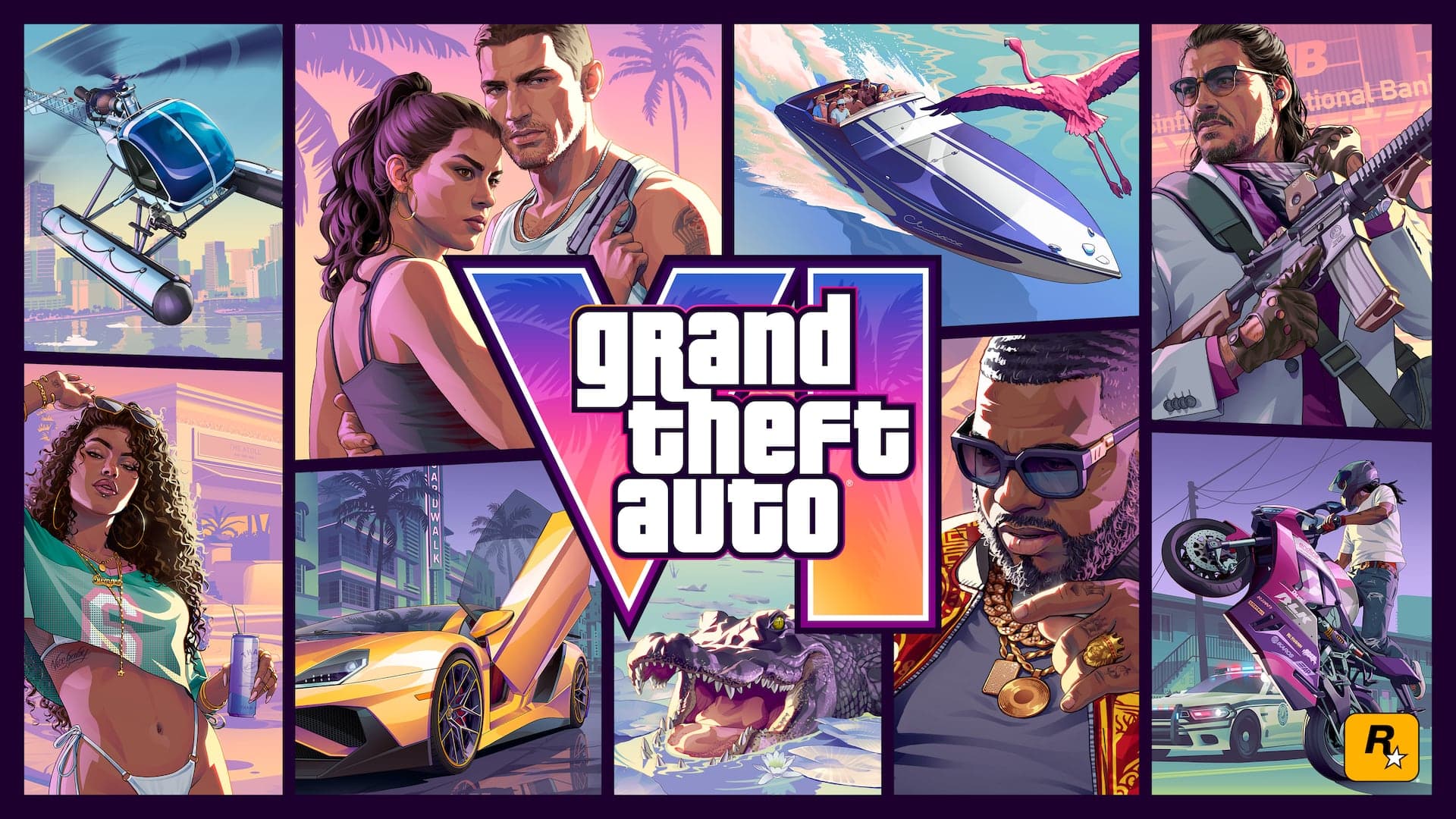
When Rockstar confirmed that Grand Theft Auto VI would return to Vice City, a substantial part of the reaction assumed a return to the aesthetic of the 2002 game: neon, pastels,...
When Rockstar confirmed that Grand Theft Auto VI would return to Vice City, a substantial part of the reaction assumed a return to the aesthetic of the 2002 game: neon, pastels, synth-pop, a Miami filtered through the memory of 1980s crime cinema.
The material Rockstar has actually shown suggests something quite different.
The state, not the city
Vice City now sits inside the fictional state of Leonida. That expansion matters. Grand Theft Auto's satire has historically worked best when it has room to contrast: the city against the suburbs, the coast against the interior, wealth against the places wealth is extracted from.
A single city gives you one target. A state gives you a gradient.
The footage is contemporary, aggressively so
The first trailer is built around vertical video, livestreams, phone footage and the texture of the modern feed. It opens on social media aesthetics rather than establishing shots. That is a thesis statement.
Where the 2002 game satirised a decade safely in the past, this one appears to be aiming at the present, which is a considerably harder target because it moves.
Lucia changes the register
Introducing the series' first female lead in a correctional setting frames the story around consequence rather than aspiration. Previous protagonists largely climbed. This one begins having already fallen, which suggests a narrative concerned with what the system does to people rather than what people extract from it.
Whether the finished game sustains that framing is unknown. Rockstar's writing has often been sharpest at the level of environment and incidental detail rather than main-story character work.
What to hold loosely
All of the above is reading marketing material, which is a limited instrument. Trailers are constructed arguments about a product, assembled to create an impression. The tonal signals are real, but tone in a trailer and tone across a fifty-hour game are not the same thing.
Email edition
Liked this? Get the next one by email.
One concise edition a week: the reviews, trailers and watch guides worth your time.
Written by
pracandyFlix Features Desk
pracandyFlix editorial contributor covering movies, streaming and the craft behind popular storytelling.
Comments
- No comments yet. Be the first.