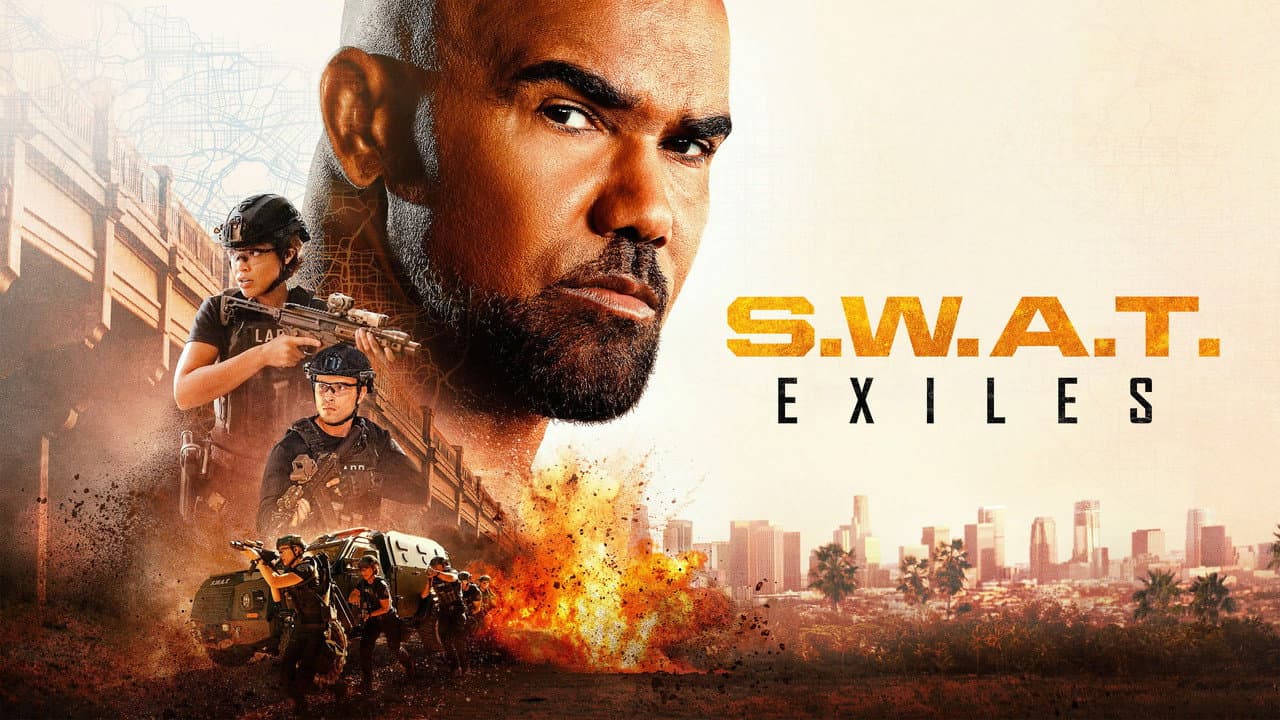
Image via TMDB S.W.A.T. Exiles has officially premiered on Starz, bringing the franchise back to life after the conclusion of its eight-season run on CBS. The new series, which...
⏱️ 8 min read · 🌐 Trending
📺 Trailer: S.W.A.T. Exiles | Official Trailer | STARZ · STARZ on YouTube
S.W.A.T. Exiles has officially premiered on Starz, bringing the franchise back to life after the conclusion of its eight-season run on CBS. The new series, which serves as a direct sequel to the original procedural, stars Shemar Moore as Daniel "Hondo" Harrelson, who is no longer the polished, unblemished leader of the LAPD's Special Weapons and Tactics team. Instead, he is a bitter, disgraced former officer who has been forced into private security work for tech executives. The show marks a significant shift in tone and platform, moving from the broad, family-friendly appeal of network television to the more adult-oriented landscape of premium streaming. For fans who spent nearly a decade following Hondo’s journey, the return is both a comfort and a puzzle. The core question remains: does this new iteration offer a fresh perspective on the character, or is it simply a rehash of the same formula that defined the original series? The answer, as it turns out, is a complex mix of both, with the show leaning heavily into its roots while attempting to inject a layer of personal trauma that distinguishes it from its predecessor.
The Fall from Grace: Hondo’s New Reality
The premise of S.W.A.T. Exiles is built on the aftermath of a catastrophic event that occurred off-screen between the end of the CBS series and the start of this new chapter. According to the narrative established in the premiere, Hondo took the fall for a botched raid that resulted in the death of a young S.W.A.T. officer named Nico. The official story, which Hondo has accepted to protect his reputation or perhaps out of genuine guilt, is that he leaked body camera footage from the mission. This act of alleged betrayal led to his dismissal from the LAPD and his subsequent exile from the life he loved. For two years, he has been working in private security, a job that clearly does not satisfy him and leaves him feeling hollow and disconnected. This backstory is crucial because it sets the emotional stage for the entire season. Hondo is not just leading a team; he is trying to redeem himself while battling the ghosts of his past. Showrunner Jason Ning emphasized in interviews that the goal was to start Hondo in a "different place," one where he is angry, bitter, and wounded. This emotional propulsion is intended to carry the character through the season, providing a more internal conflict than the external threats that dominated the earlier seasons.
The visual language of the show reflects this internal turmoil. The opening scenes depict a messy apartment and a Hondo who looks physically and mentally frayed. The dialogue is sharper, less polished, and more reflective of a man who has lost his way. This is a stark contrast to the confident, almost superhuman demeanor Hondo often displayed in the later seasons of the original series. The show does not shy away from the idea that Hondo has been "through hell," as Ning put it. This trauma is not just a plot device; it is the lens through which every interaction with his new team is filtered. He is not the mentor figure he once was; he is a broken man trying to hold it together. This shift is significant because it challenges the audience to see a different side of the character, one that is more vulnerable and less invincible. It is a bold move for a procedural, which often relies on the stability and competence of its leads. By making Hondo unstable, the show creates a higher stakes environment where his mistakes could have real consequences, both for his career and for the lives of those around him.
Assembling the Misfits: A New Squad
One of the most immediate changes in S.W.A.T. Exiles is the composition of the team. Hondo is no longer leading his old crew; he is tasked with building a new unit from the ground up. This new group is a collection of misfits, each with their own reasons for being "exiled" from mainstream police work or society. The showrunner, Jason Ning, explained that he wanted to avoid creating "five different versions of a young rookie." Instead, each character represents a different reason why someone might have been dismissed or discounted. This approach adds a layer of complexity to the team dynamics, as each member brings a unique set of skills and baggage to the table.
The squad includes Sammy Bishop, played by Lucy Barrett, who is described as a "terminally online GenZer." Her character is often seen live-streaming her activities, which creates a modern, digital tension with the traditional, analog world of police work. Then there is Ethan Cole, played by Freddy Miyares, a socially awkward drone specialist whose tech skills are crucial to the investigation. Cassidy Han, played by Zyra Gorecki, is a one-legged officer who outmaneuvers most of her colleagues, challenging stereotypes about physical ability in law enforcement. Jude Reddick, played by Ronen Rubinstein, has a mysterious past that is hinted at but not fully revealed in the premiere. Finally, there is Malik Henderson, played by Adain Bradley, who immediately challenges Hondo’s leadership motivations after the first training exercise goes disastrously wrong. This dynamic is crucial because it establishes the central conflict of the season: can Hondo lead a team that does not trust him, or will his bitterness drive them apart? The interactions between these characters are where the show finds its new life. The friction between the old guard (Hondo) and the new generation (the recruits) is a rich vein of drama that the original series did not fully explore. It allows for character development that goes beyond the weekly case of the week, giving the show a serialized feel that is more in line with modern streaming trends.
The inclusion of these diverse characters also serves to update the show for a contemporary audience. The original S.W.A.T. was a product of its time, reflecting the values and concerns of the 2010s. Exiles, by contrast, engages with current issues such as social media, technology, and generational divides. This is not just a cosmetic change; it is a fundamental shift in how the show approaches its subject matter. The use of drones, live-streaming, and digital forensics is not just a plot device; it is a reflection of how modern policing is evolving. The show is aware of this and uses it to create tension and conflict within the team. For example, the fact that Cole is using his tech knowledge to investigate the case in ways that traditional S.W.A.T. did not is a clear nod to the changing nature of law enforcement. This attention to detail adds a layer of realism that was sometimes lacking in the original series, where the tech was often secondary to the action.
Old Faces and New Directions
Despite the new cast and setting, S.W.A.T. Exiles is not entirely disconnected from its predecessor. The show features several familiar faces, including Patrick St. Esprit, who returns as Commander Robert Hicks, Hondo’s old boss. His presence serves as a bridge between the old and new worlds, reminding the audience of the history and relationships that defined the original series. There is also a brief appearance by Jay Harrington as Deacon, the original series’ star, which is a nice touch for long-time fans. These callbacks are handled with a sense of nostalgia, but they do not overshadow the new story. They serve to ground the new characters in the existing universe, making the transition feel organic rather than forced.
The plot of the premiere revolves around a former cartel assassin who comes out of hiding to be with his daughter, only to find his family threatened. This case serves as a catalyst for the team’s first real test, and it is where the show’s strengths and weaknesses become apparent. The action sequences are still well-choreographed and intense, with Hondo and his squad charging into situations with a mix of bravery and recklessness. However, the show is not afraid to show the consequences of these actions. The first training exercise goes wrong, and the team is left shaken and questioning their leadership. This is a significant departure from the original series, where failures were often resolved quickly and without lasting impact. In Exiles, the mistakes have weight, and the characters are forced to deal with the aftermath. This adds a layer of realism and emotional depth that elevates the show above a standard procedural.
Another key element of the premiere is the revelation that there is a mole in Hondo’s squad. This twist introduces a layer of paranoia and distrust that runs through the rest of the season. Hondo, who is already struggling with his own guilt and anger, now has to deal with the possibility that one of his own is working against him. This is a classic trope, but it is executed with a sense of urgency and tension that keeps the audience engaged. The show does not reveal who the mole is immediately, but it provides enough clues and red herrings to keep the audience guessing. This serialized element is a smart move, as it gives the show a through-line that connects the individual episodes. It also allows for deeper character development, as the team is forced to confront their own doubts and fears. The mole storyline is a test of trust, and it is a test that Hondo is not sure he can pass.
Streaming vs. Network: A Change in Tone?
One of the biggest questions surrounding S.W.A.T. Exiles is whether the move from CBS to Starz has changed the tone of the show. Many fans expected that the shift to a premium streaming platform would result in a grittier, more violent, and more adult-oriented take on the franchise. However, the premiere suggests that this is not entirely the case. While there are a few more profanities and a slightly darker mood, the structure of the episodes remains largely the same as they were on CBS. Hondo and his squad still charge into situations, shoot people, and hope they get in and out without anyone getting hurt. The show is not the edgy, R-rated drama that some might have hoped for, but it is also not the sanitized, family-friendly procedural that it was on network television. It occupies a middle ground that is both familiar and new.
This middle ground is a double-edged sword.
Sources & references
- Primary source: Decider — Stream It Or Skip It: ‘S.W.A.T. Exiles’ On Starz, A Sequel Series Where Shemar Moore’s Hondo Returns To S.W.A.T. To Command A Team That The LAPD Is Rooting Against
- TVLine — S.W.A.T. Exiles Boss Unpacks Hondo's Biggest Losses In Starz Spin-Off Premiere: 'He's Been Through Hell' (Grade It)
- Variety — ‘Control Resonant’ Team on ‘Reverse Symmetry’ of Switching From Jesse to Dylan as Sequel Game’s New Protagonist
- Decider — Stream It Or Skip It: ‘The Final Problem’ On Netflix, Where An Actor Who Played Sherlock Holmes Solves Murders At A Luxurious Hotel On A Remote Island
Facts are credited to the sources above. Images and trailers belong to their respective owners and are used for editorial commentary.
Email edition
Liked this? Get the next one by email.
One concise edition a week: the reviews, trailers and watch guides worth your time.
Written by
The pracandyFlix Desk
pracandyFlix editorial contributor covering movies, streaming and the craft behind popular storytelling.
Comments
- No comments yet. Be the first.